
Brand & Content Playbook
The team's reference for the Roadmap brand and this year's event. The brand stays the same year to year; the theme tilts it — here's the evergreen identity plus this year's direction, in one place.
How to Use This Guide
This is the team's read-only reference for the Roadmap brand and this year's event — the overview, not a production manual.
It holds two kinds of content, tagged so you can tell them apart: Evergreen the brand itself (logo, colors, fonts, voice, editorial principles), which rarely changes; and Update Each Year the pieces that flex with the annual theme (the hero blurb, tracks, message structure, and session list).
Detailed event-planning and production materials live separately — this document is just the brand and this-year overview.
Brand Foundation Evergreen
What Roadmap is
Roadmap is the Midwest's most practical marketing and communications conference — a one-day, local-first gathering where marketers, communicators, and business owners get real, usable guidance from people doing the work in their own market. Not theory. Not hype. The next right turn.
Positioning, in one line
Practical marketing guidance from local pros — stuff you can actually use on Monday.
Who it's for
In-house marketers and teams of one, agency and freelance pros, and business owners across the Chippewa Valley and greater Midwest — especially people working with real constraints on time, budget, and headcount.
Voice & Tone Evergreen
Roadmap sounds like a sharp, friendly colleague who's actually done the work — practical, a little irreverent, and allergic to hype.
Personality
| Trait | What it means |
|---|---|
| Practical above all | "Most practical" is in the tagline for a reason. Useful beats flashy every time. Aim to leave people with something to try. |
| Plain-spoken & confident | Short sentences. Real words. We say "stuff that works," not "synergistic, best-in-class solutions." |
| Warm & human | We're peers, not gurus. Encouraging, inclusive, never condescending — even when we know our stuff. |
| A little irreverent | We'll say "Getting Sh*t Done." We crack jokes. Wit, never snark. Confidence, never arrogance. |
| Road-trip native | The map/route metaphor is ours — recalculating, on-ramps, next turn, itinerary stops, "GET IN! LET'S GO!" Use it naturally; don't drive it into the ground. |
| Midwest-grounded | Local, unpretentious, community-minded. We name our own backyard and mean it. |
Do / Don't
Do
- Lead with the useful thing.
- Write like you talk. Contractions welcome.
- End with a "do-this-Monday" takeaway.
- Use the road-trip metaphor for structure and fun.
- Speak from what we're actually seeing with clients and teams.
- Bring real, local examples.
Don't
- Don't hype, hedge, or buzzword.
- Don't lecture or talk down.
- Don't overload the road puns (a little goes a long way).
- Don't be vague — "it depends" needs a "here's how to decide."
- Don't chase trends we can't make practical.
- Don't sound like everyone else's AI-flavored content.
House phrases & motifs
"GET IN! LET'S GO!" · "Ready for [year]" · "Itinerary Stop" · "Getting Sh*t Done" · "Register now — then pick your lane" · "No theory, no hype, just the next right turn." · "Use-it-Monday."
Tone shifts by context
Promo & social: punchiest, most playful. Session content & recaps: practical and substantive, wit dialed back a touch. Partner/sponsor comms: warm and professional, still human. The personality never disappears — only the dial moves.
Visual Identity Evergreen
Quick reference only. The Roadmap Brand Guide.pdf is the source of truth for logo files, spacing, and exact usage.
Colors
Type
| Use | Font |
|---|---|
| Titles | Montserrat Extra Bold (often all-caps) |
| Subtitles / headings / body | Montserrat — Bold & Light |
| Decorative accent | Script — Vintage Goods (e.g., "Monthly" newsletter mark). This web doc approximates it with a Google script for display only. |
a little vintage script, used sparingly
Logo
The roadmap wordmark with the map-pin flourish on the "p" and the year set in a highway-shield lockup. Available horizontal and stacked, in color (on light backgrounds) and white (on navy/coral). The year label changes annually — swap in the new year's lockup each cycle. Click any asset to download.
This year — 2026 Update Each Year


Design elements
The vintage road-trip illustration system that carries the retro-Americana feel. Use the road graphic wide or cropped.




These graphics are shown for reference. Download the original files — logos, design elements, and MYMU graphics — from the Roadmap Assets folder in Basecamp.
MYMU — Mid-Year Meet Up
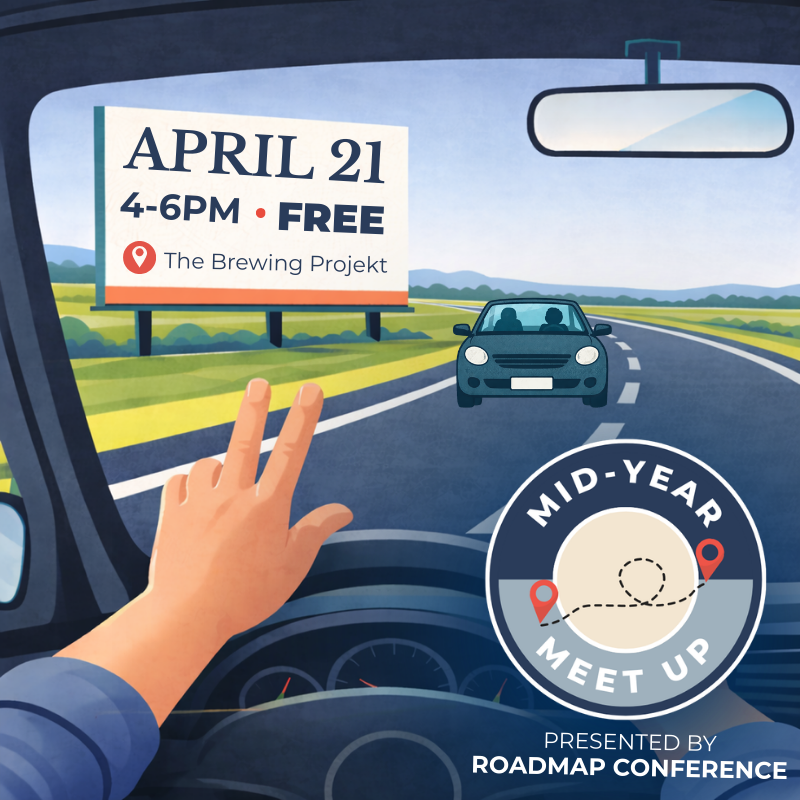
The Mid-Year Meet Up is the free, social spring touchpoint that keeps the community warm between conferences. It rides the same road-trip brand but has its own badge — the "Mid-Year Meet Up" route emblem — plus event promo built on the brand's illustration system. 2026 MYMU: April 21 · 4–6 PM · free · The Brewing Projekt · presented by Roadmap Conference.
Photography
Real, candid event moments — people talking, working, laughing, presenting. Warm and unstaged. Show the community and the energy, not stock-photo polish.
Because there are too many photos to live in this guide (and they grow each year), we keep them in one shared Photo Library and link to it here. That's the single source for promo, social, recaps, and speaker graphics.
Open the Photo Library →Lives in Google Drive, with a subfolder for each year (photos and videos). Keep full-res originals for print, favor candid community shots in the style above, credit the photographer where required, and only use photos of attendees who've consented.
The look, in a few frames — sample shots from past Roadmaps. Full-res versions and the complete library live in the Drive folder above.
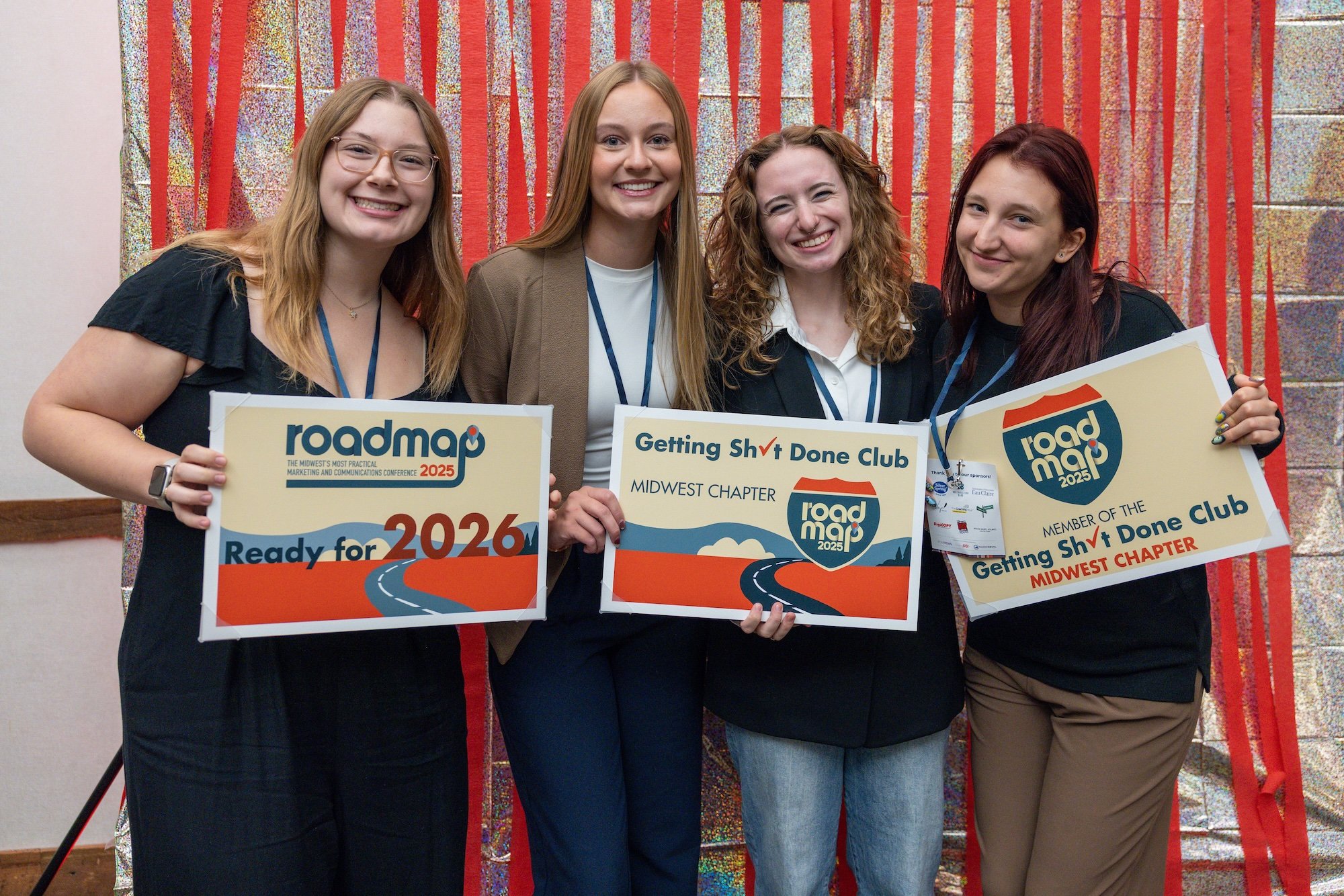
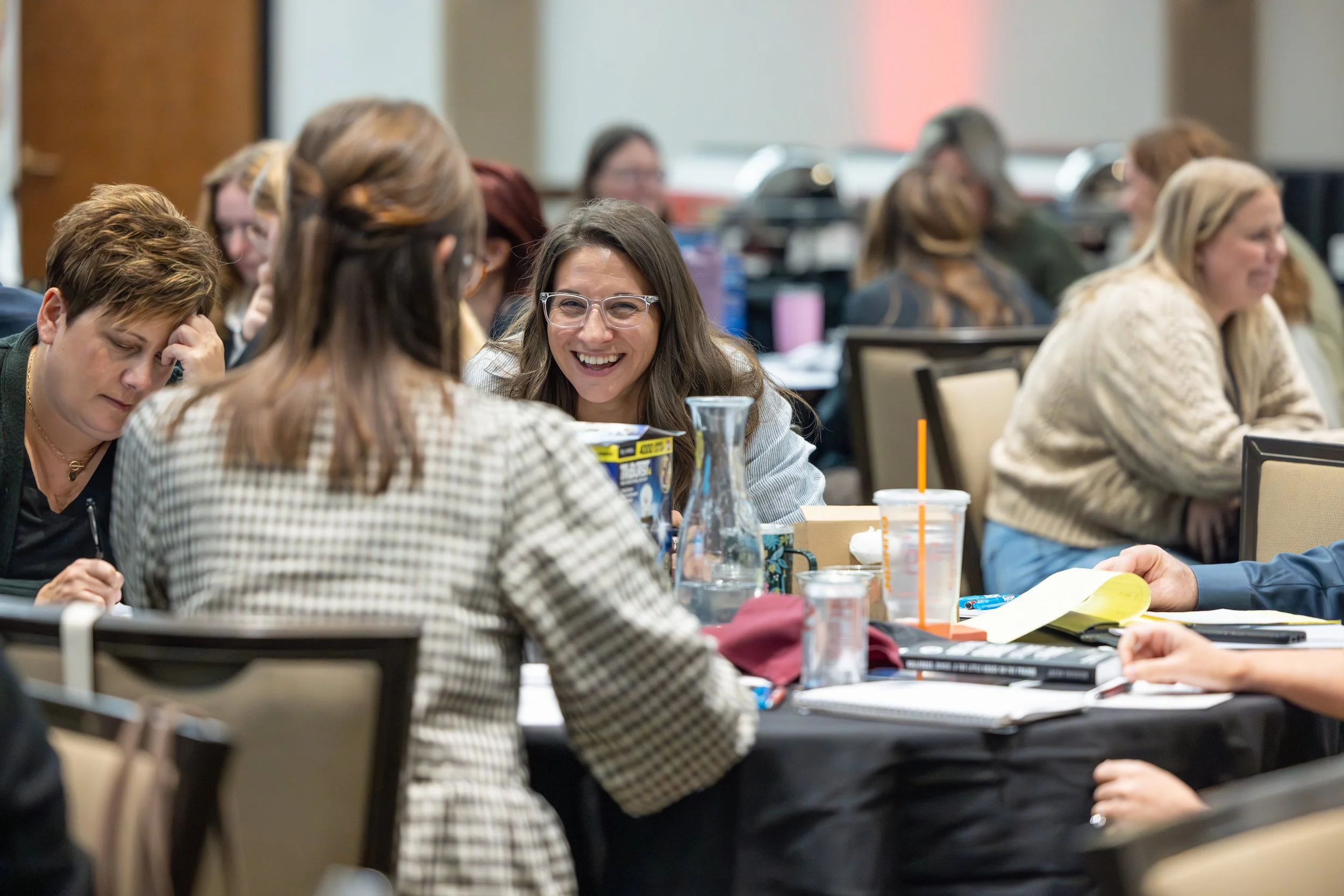
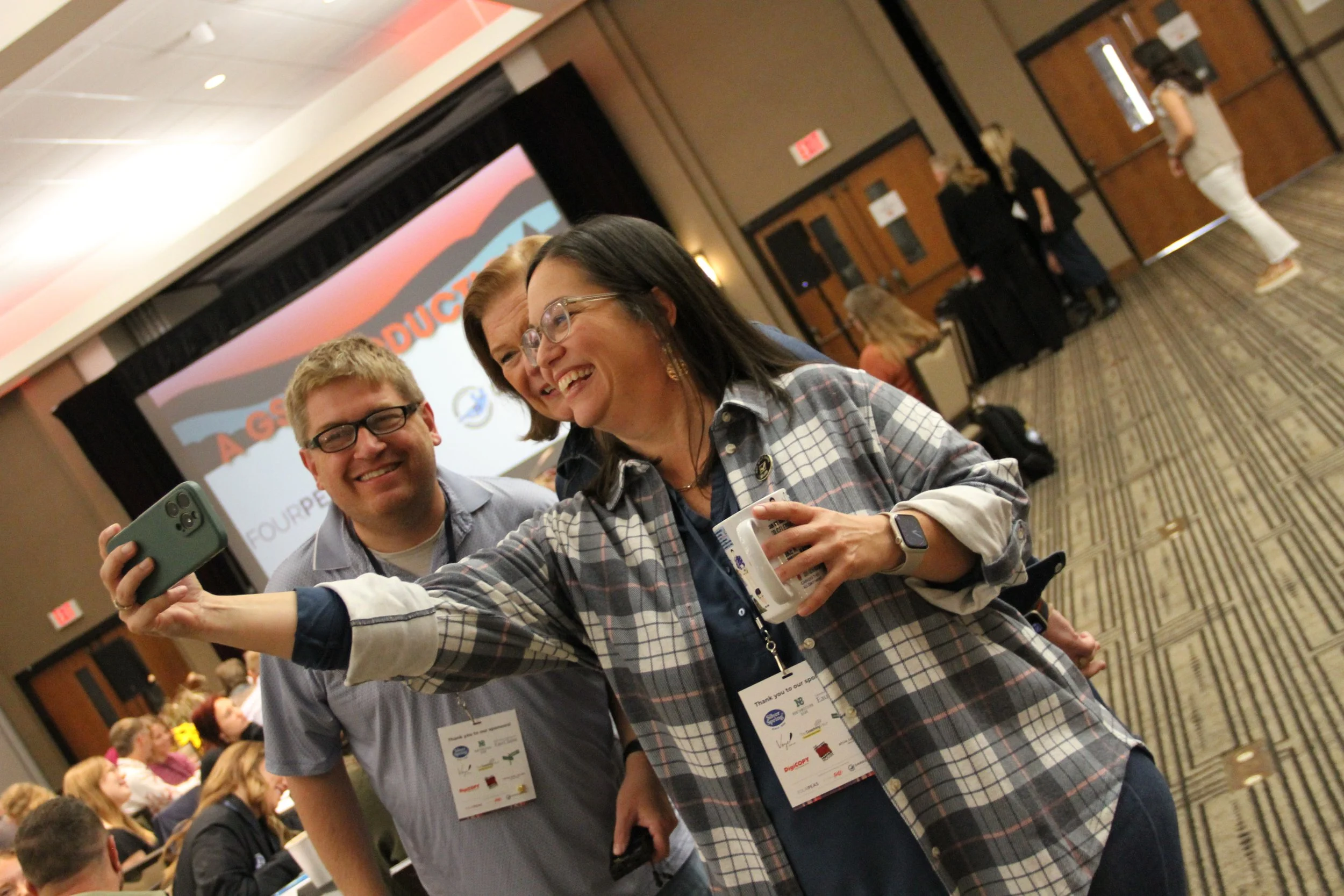
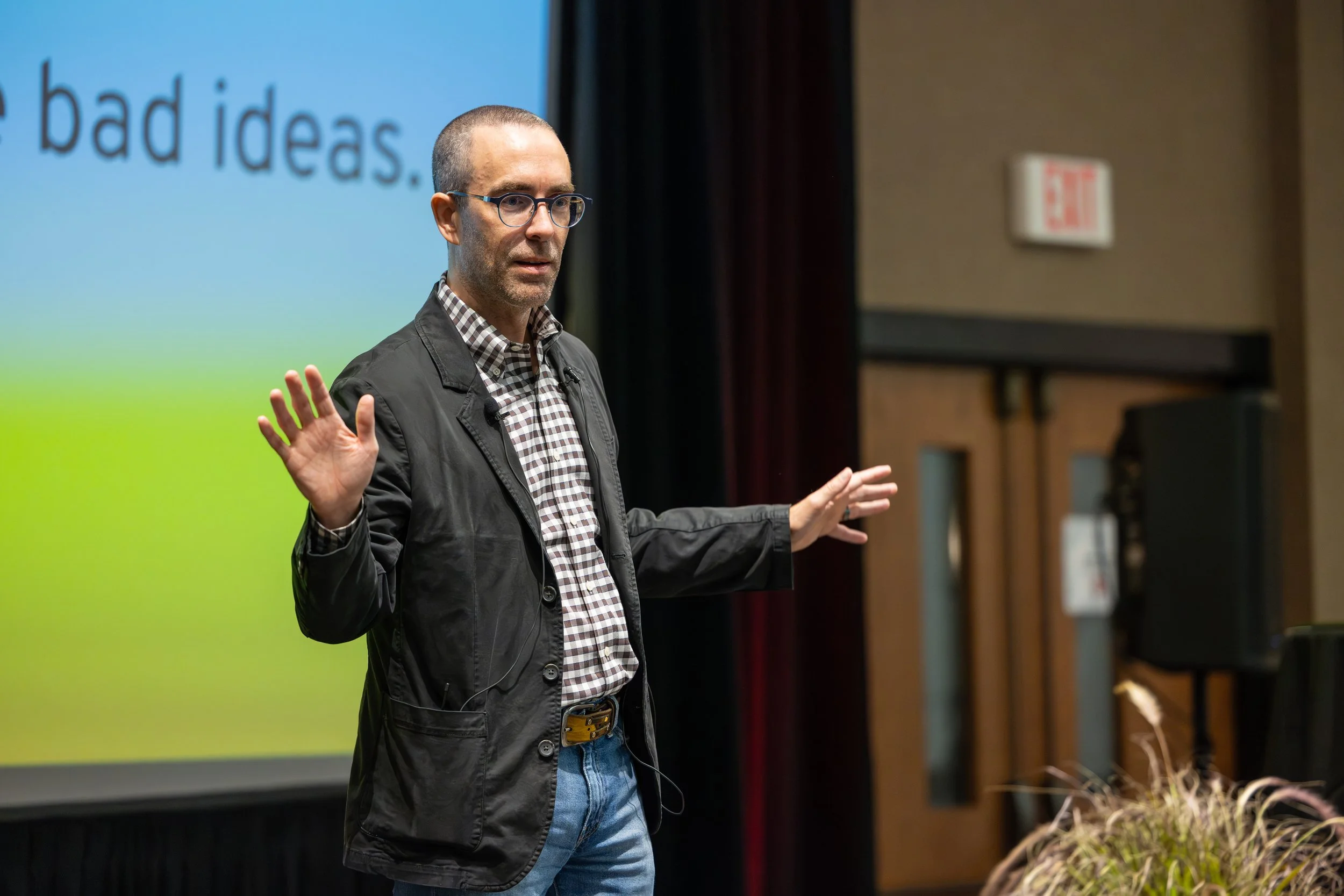
These are sample shots for reference. The full library lives in Google Drive (button above); grab originals from Basecamp.
Editorial Direction Evergreen
How we decide what Roadmap says — and how we plan content year to year.
Content pillars
Most of what we publish and program lives in one of these recurring territories. They're drawn from what Roadmap has actually programmed across 2024–2026 — not just one year — so they're stable; only the angle changes with the times.
| Pillar | The territory | Has shown up as |
|---|---|---|
| Foundations & strategy | The fundamentals that don't go out of style — customer journey, aligning to business goals, the basics done well. | "How does this support our business goals?" and customer-journey takeaways (2024); the Foundations keynote (2026). |
| Brand, creative & storytelling | Building the brand, telling the story, and taking creative risks to stand out. | Supercharge Your Brand; From Boring to Bombshell; The Power of a Bad Idea (2025). |
| Channels, social & content | Where and how to show up — organic social, LinkedIn, influencers/PR, email, video, search. | Organic social & vertical video (2024); Not Sucking on Social Media (2025); LinkedIn, influencers, email, AI search, video (2026). |
| AI & what's next | The shifting terrain — AI in the workflow, AI in search, doing it safely, keeping it human. | AI tools (2024); Click Smart Not Scared; Keeping It Real in the Age of AI (2025); The New AI Search Landscape & the "My Relationship with AI" panel (2026). |
| Measurement & proof | Knowing whether it's working — metrics that matter, diagnostics, reporting up. | The "support business goals" lens (2024); What to Measure (2026). |
| Execution, buy-in & adaptable teams | Getting it done — selling ideas, aligning sales & marketing, advocating for resources, and adapting without falling apart. | I'm Talking Here (communicating to leadership); Mom + Dad Are Fighting (sales/service synergies) (2025); Getting to Yes (2026). |
| Community & local | The Midwest angle — local case studies, students & UWEC, networking, and the "Getting Sh*t Done" crew itself. | UWEC student involvement, networking, and the GSD community across every year. |
The annual theme model
Each year we pick one theme — a single idea that tilts the brand toward what matters most that year. The theme does not change the logo, colors, fonts, or voice. It changes the lens: the hero blurb, the way sessions are framed, the promo angle, and the content calendar. Think of the brand as the car and the theme as this year's destination.
Editorial principles (use these for every session, post, and recap)
| Speak from what you're actually seeing with clients, teams, and projects. |
| Keep it practical. The Roadmap crowd likes useful more than flashy. |
| It's okay to disagree a little — that makes the conversation more interesting. |
| Bring examples. "We're seeing…" beats "People say…" |
| End with something the audience can go try. |
Adaptability is part of the brand
The marketing landscape is changing weekly — we're building the plane while flying it. That's not a disclaimer; it's the worldview. Roadmap gives people enough structure to move (a plan, a process, a next step) and the permission and skills to adapt when the road changes. Hold both.
2026 Theme: Recalculating Update Each Year
The brand stays Roadmap. This year it tilts toward one truth: the route changed, and the smart move is to recalculate — not panic, not freeze, just reroute with better information.
Why this theme, this year
AI is rewriting how people search, discover, and decide. Channels that worked last year feel quieter. The landscape isn't settled — it's still moving, weekly. "Recalculating" turns that uncertainty into the brand's favorite thing: a practical next move. It's unmistakably ours (the GPS metaphor writes itself), and every speaker can hang their topic on it.
Public-facing blurb
Recalculating.
The map you've been using is going out of date. AI is rewriting how people search, discover, and decide. Channels that worked last year feel quieter. The old route to visibility, trust, and growth just doesn't get you there the same way anymore.
Roadmap 2026 is where the region's marketers, communicators, and business owners stop, check the map, and plot a smarter route forward. One day, two tracks, and a room full of local pros sharing what's actually working right now — no theory, no hype, just the next right turn.
Pick your lane: The Route — where to show up and how to get seen — or The Drive — how to execute, measure, and get the yes. Then leave with a roadmap you can actually use.
Thursday, October 15 · Lismore Hotel · Eau Claire, WI
The two tracks
The cleanest way to split them isn't "what vs. how" — every session teaches some how, so that line blurs fast. The sharper axis is outward vs. inward: The Route is about reaching your audience; The Drive is about running the work behind it. Quick test: if a session is about getting found and chosen, it's Route. If it's about making marketing happen and proving it works, it's Drive.
| Track | The idea | You're here if you want to… |
|---|---|---|
| The Route Reaching your audience | The outward game — the channels, platforms, and tactics that get you found and chosen: LinkedIn, influencers/PR, AI search, email, social. | …show up in more places and get noticed by the right people. |
| The Drive Running the work | The inward game — making marketing actually happen and proving it works: measurement, production, buy-in, and planning your own roadmap. | …get the work done, funded, measured, and bought into. |
Message structure (for promo / creative)
Core message: The landscape is still changing — so we recalculate, with practical, local guidance you can use tomorrow.
One-liner: The road keeps changing. Recalculate.
Supporting pillars
| The landscape is shifting. AI, search, and channel behavior keep changing the terrain. Name it honestly — that's why we recalculate, continuously. |
| Local pros, real answers. Guidance from consultants and practitioners working in this market — what's actually working, not theory or hype. |
| Leave with a roadmap. Pick a track, get hands-on, and walk out with a practical plan heading into 2027. |
Tone tilt
Confident and steady, not alarmist. The road changed — no big deal, we know how to reroute. Wit intact.
Visual cues
GPS / navigation language (routes, road signs, "recalculating…", rerouting); two diverging lanes for the two tracks; a "next right turn" motif for takeaways; keep it warm and regional, not a generic stock highway.
Primary CTA
Register now — then pick your lane.
2026 Sessions Update Each Year
Descriptions marked Draft are written to fit the speaker's expertise and the theme, and still need the speaker's confirmation. Remaining open items: the lunch panelists and the nonprofit partner.
A quick, warm open: why this community exists, what to expect from the day, and how to get the most out of it. Sets the tone before we hit the road.
You can't recalculate a route until you know where you're standing. Your hosts set the foundation for the day: Lee on why buy-in is the ground everything else is built on, Erin on mapping the customer journey that should drive every decision, and Benny on the simple formula for getting started without getting stuck. Leave with your coordinates set — and a reason to stay for the turns ahead.
Each host's piece sets up a later session: Lee's buy-in segment leads into "Getting to Yes," Erin's customer-journey piece leads into "What to Measure," and Benny's "getting started" formula leads into "The New AI Search Landscape." Foundations sets the coordinates; the breakouts drive the route.
DraftWhen a new player shows up in a big way, everyone deals with it differently. Over lunch, a panel of working creatives — designer, writer, and more — get honest about AI: where it's genuinely in their workflow, where they refuse to let it in, what clients are asking for, and how they protect trust and credibility while everything shifts. Less hype, more lived experience.
Draft — confirm panelistsThis is where Roadmap stops talking and starts building. Teams roll up their sleeves to build a real campaign for a local nonprofit — planning, brainstorming, and producing a few deliverables on the spot. It's the day's ideas put to work in real time, with the goal of actually launching at least one campaign in the spring.
Draft — nonprofit partner TBD (UWEC connection referenced)The day ends where it should: with honesty about doing the work. Lee, Erin, and Benny reconvene to debrief — what stood out, what surprised them, what they'd actually do Monday morning — and open the floor for your questions. Your last stop before the on-ramp to 2027.
DraftLinkedIn is where your next client is already paying attention — most businesses just aren't giving them a reason to. Justin breaks down how to turn a quiet profile and sporadic posting into a steady source of visibility, leads, and stronger relationships. Expect a practical system for showing up consistently, starting conversations that go somewhere, and winning work without feeling like a salesperson.
Draft — confirm angleInfluencer marketing is no longer just about finding someone with a following and paying for a post. The strongest programs start with a clear business goal, the right creator mix, and a plan to turn content into measurable impact. Catherine shares how brands can build influencer strategies that drive awareness, trust, traffic, content, and real business results — how to evaluate creators beyond follower count, structure paid and unpaid partnerships, maximize content usage, and measure what actually matters.
Final description provided by speaker.
Search isn't what it was even a year ago. Between AI Overviews, AI Mode, and zero-click answers, "being on Google" no longer means being seen. Benny maps the new terrain — SEO, GEO (generative engine optimization), and paid — and what it actually takes to stay visible when the machines are answering the questions. Practical, current, and built for small teams.
Draft — confirm scopeNot every business needs a national creator with a million followers. For local shops, service businesses, and community organizations, the people who actually move customers might be the micro-creator down the street, a trusted local reporter, or your own happy regulars. Luke focuses on the local reality: how small businesses and lean teams decide between influencer partnerships and good old-fashioned PR, find creators who genuinely reach your community, and earn attention without a national-brand budget. Expect Chippewa Valley examples and do-this-Monday tactics for when your market is measured in miles, not millions.
Pairs with Catherine: national-brand playbook in the morning, local field guide in the afternoon.
Draft — confirm angleEmail isn't dead — boring email is. Amanda shares what actually makes people open, read, and act: how to write for an engaged audience, build a rhythm you can sustain, and turn your list into the one channel you truly own. Practical tips you can apply to your very next send.
Draft — confirm angleMost marketers are drowning in numbers and starving for insight. Erin cuts through the dashboard noise to the metrics that actually tell you whether your marketing is working — separating business metrics, diagnostics, and performance so you know what to report up, what to act on, and what to quietly stop tracking. Leave with a simple, honest way to measure what matters.
Draft — confirm angleEveryone says you need video. Almost no one tells you how to actually get it made. Andrew pulls back the curtain on real-world video production — the storytelling that makes it worth watching, how user-generated content fits in, and what it's really like to work with a videographer from first call to final cut. Leave knowing how to brief, budget, and ship video that earns its keep.
Draft — confirmEvery marketing decision comes down to one conversation: someone asks for a yes, and someone has to give it. Great work dies in the gap between a good idea and the approval to run it — and that gap exists whether you're the one pitching or the one signing off. Drawing on years on both sides of that table, Lee breaks down how the yes actually happens: for marketers, how to frame the ask, speak the language of the people holding the budget, and turn a skeptical "we've always done it this way" into a green light; for owners and decision-makers, how to tell a real opportunity from a shiny object, ask the questions that surface risk early, and say no without killing momentum. Leave understanding the other side of your own pitches — and better at getting to yes from whichever seat you're in.
Pays off the buy-in thread Lee opens in the Foundations keynote.
Less sitting, more doing. In these hands-on working sessions, you take what you're hearing all day and put it to work on your own plan — pencil to paper (or laptop to lap), with facilitators and peers in the room to pressure-test your thinking. Come with a challenge; leave with a marked-up route for what's next.
Draft — confirm facilitators